
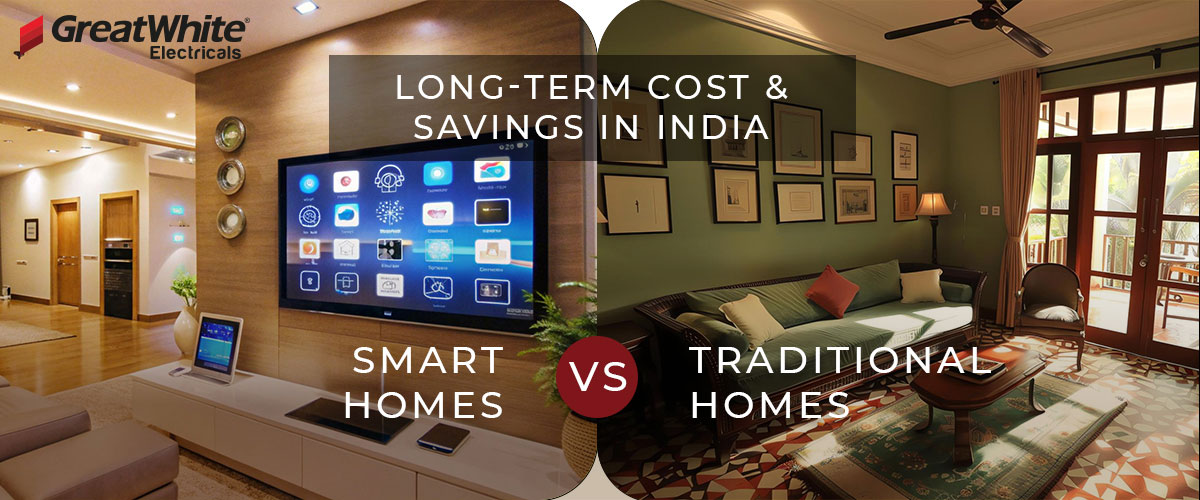
Smart Homes vs Traditional Homes: A Long-Term Cost Comparison for India
India’s homes are evolving. With rising electricity tariffs, upcoming summers which have touched 45°C in the past and increasing dependence on appliances, cost efficiency is no longer optional; it’s essential. The question many homeowners and builders are asking today is simple:
Are smart homes truly more cost-effective in the long run than traditional homes?
Let’s break it down across four critical factors: upfront investment, electricity bills, maintenance and long-term savings—through the lens of the Indian context.
Upfront Investment
Traditional Homes- Standard electrical wiring
- Conventional switches and sockets
- Basic lighting and appliances
- Manual control of fans, ACs, geysers
Traditional Homes
- Automation systems (app/voice controlled)
- Smart switches, dimmers and sensors
- IoT-enabled devices
- Energy-efficient appliances
- Centralized monitoring systems
Cost Reality:
A smart electrical setup may cost 15%–30% more initially, depending on scale and brand selection. But here’s the key - this isn’t just an expense. It’s an infrastructure upgrade that changes how energy is consumed.
Electricity Bills
India’s rising power tariffs, especially in metro cities like Mumbai, Delhi and Bengaluru, make energy optimization crucial.In Traditional Homes:
- ACs left running unintentionally
- Geysers overheating
- Lights left on
- No load monitoring
- No peak usage optimization
In Smart Homes:
- Motion sensors switch off unused lights
- Smart thermostats regulate AC efficiently
- Automated schedules reduce standby power
- Real-time energy monitoring identifies high consumption devices
Smart homes can reduce electricity consumption by 20%–35% annually depending on usage patterns. In a household spending ₹6,000–₹10,000 monthly on electricity, that translates into ₹15,000–₹30,000 yearly savings. Over 10 years? That’s substantial.
Maintenance Costs
Traditional Homes- Wiring deterioration unnoticed
- Load imbalance issues
- Overheating risks
- Manual troubleshooting
- Higher chances of electrical faults
Smart Electrical Systems
- Fault detection alerts
- Surge protection integration
- Load monitoring
- Preventive maintenance insights
Smart systems reduce:
- Appliance damage
- Fire hazards
- Emergency repair costs
Long-Term Value
| Factor | Traditional Home | Smart Home |
| Initial Cost | Lower | Higher |
| Electricity Bills | Higher | Lower |
| Maintenance | Reactive | Preventive |
| Property Value | Standard | Premium |
| Future Upgradability | Limited | Scalable |
Resale Advantage
Smart homes often command a premium in urban Indian real estate markets. As smart infrastructure becomes a norm, homes without it may lose competitive appeal. Builders incorporating automation today position projects as future-ready - an important differentiator in 2026 and beyond.
Why the Indian Context Makes Smart Solutions More Valuable
Extreme Heat
Longer AC usage increases power bills drastically. Smart thermostats and automated cooling reduce excess consumption.
Rising Energy Prices
State-wise tariff hikes are frequent. Energy efficiency directly protects household budgets.
Urban Lifestyles
Dual-income families, frequent travel and remote work increase dependency on automated control and remote monitoring.
Voltage Fluctuations
Smart electrical systems with monitoring and surge protection reduce equipment damage.
The Break-Even Timeline
For most Indian households:- Extra smart home investment: ₹1.5–4 lakhs (depending on scale)
- Annual savings: ₹20,000–₹40,000 (electricity + maintenance reduction)
Post that? Pure savings and enhanced convenience. Considering a home lifecycle of 20–30 years, the long-term financial logic favors smart infrastructure
Beyond Cost: The Intangible Gains
While this comparison focuses on money, smart homes also offer:- Safety enhancements
- Convenience
- Remote access contro
- Sustainability contribution
- Reduced carbon footprint
Final Verdict: Expense or Investment?
In the Indian scenario, smart homes are no longer a tech indulgence. They are a financially strategic decision.Traditional homes may save money upfront. Smart homes save money every single month. For homeowners planning long-term living, builders designing future-ready projects and industry professionals shaping the next decade of housing—smart electrical solutions are not just about automation. They are about controlled consumption, predictable costs and scalable efficiency.