
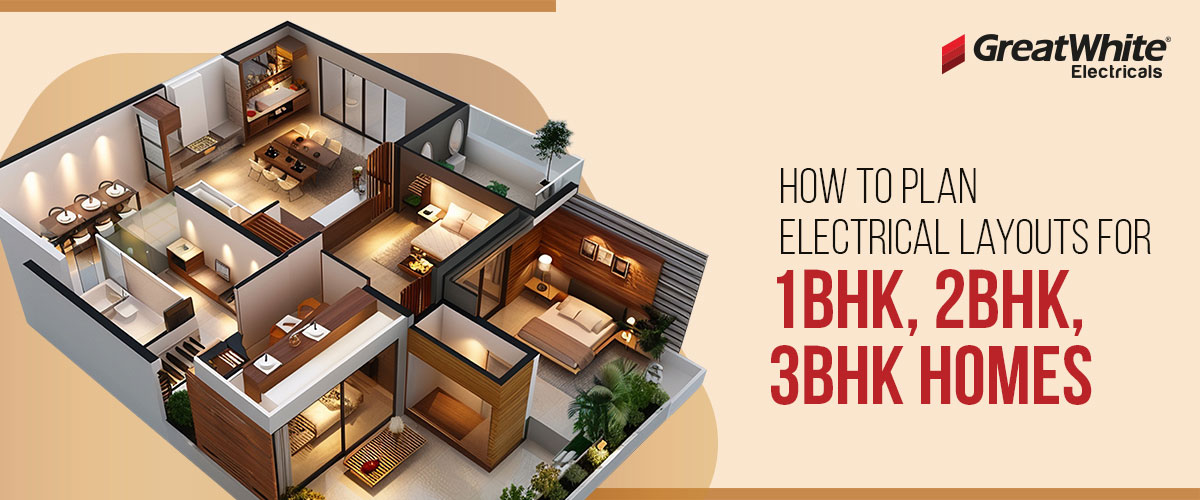
Electrical Planning Guide for 1BHK, 2BHK & 3BHK Homes
Designing the electrical layout of your home is one of the most important steps in ensuring safety, convenience and long-term efficiency. Whether you’re a new homeowner, an architect or interior designer or a family planning your dream space, this guide breaks down the process step by step with practical insights.
Step 1: Assess Your Home’s Needs
Every home is unique. A 1BHK may need fewer outlets compared to a 3BHK, but lifestyle choices (work-from-home setups, smart appliances, entertainment systems) can increase demand.
- Pro Tip: Create a room-by-room checklist of appliances and devices you plan to use.
- Common Mistake to Avoid: Don’t underestimate future needs, plan for extra outlets and provisions for smart devices.
Step 2: Plan Lighting Layouts
Lighting sets the mood and functionality of your home. Think of ambient, task and accent lighting.
- Pro Tip: Use LED lighting for energy efficiency and longevity.
- Common Mistake to Avoid: Avoid placing lights without considering furniture placement, it can lead to shadows and poor illumination.
Step 3: Position Switchboards and Outlets
Switchboards should be accessible and outlets should be placed strategically for convenience.
- Pro Tip: Place outlets at desk height in study/work areas and near bedside tables for charging devices.
- Common Mistake to Avoid: Don’t cluster all outlets on one wall, spread them out for balanced usability.
Step 4: Allocate Power for Heavy Appliances
Kitchen and utility areas demand special attention for appliances like refrigerators, washing machines, ovens and geysers.
- Pro Tip: Use separate circuits for heavy-load appliances to prevent overload.
- Common Mistake to Avoid: Never run multiple heavy appliances on the same circuit, it risks tripping and damage.
Step 5: Safety First – Earthing and Circuit Breakers
Safety is non-negotiable. Proper earthing and circuit breakers protect against shocks and fire hazards.
- Pro Tip: Install Residual Current Devices (RCDs) for added protection.
- Common Mistake to Avoid: Don’t skip earthing, it’s essential for every home, regardless of size.
Step 6: Plan for Smart Home Integration
Modern homes often include automation - smart lighting, security systems and climate control.
- Pro Tip: Lay conduits for future smart upgrades even if you don’t install them immediately.
- Common Mistake to Avoid: Avoid rigid planning, leave flexibility for evolving technology.
Step 7: Consult a Professional Electrician
Even the best plans need professional execution. A licensed electrician ensures compliance with local codes and standards.
- Pro Tip: Share your lifestyle needs clearly with the electrician, they can suggest practical solutions.
- Common Mistake to Avoid: Don’t rely solely on generic templates, personalize your plan for your home.
Electrical planning is the backbone of a safe, functional and future-ready home. By carefully assessing your needs, positioning outlets and switchboards wisely and prioritizing safety measures, you set the stage for comfort and convenience in everyday living. Whether it’s a compact 1BHK or a spacious 3BHK, thoughtful planning ensures your home adapts to modern lifestyles and evolving technology. With the right approach and professional guidance, your electrical layout becomes not just practical but also a long-term investment in peace of mind.