Why Circuit Protection Should Be Customized Per Home
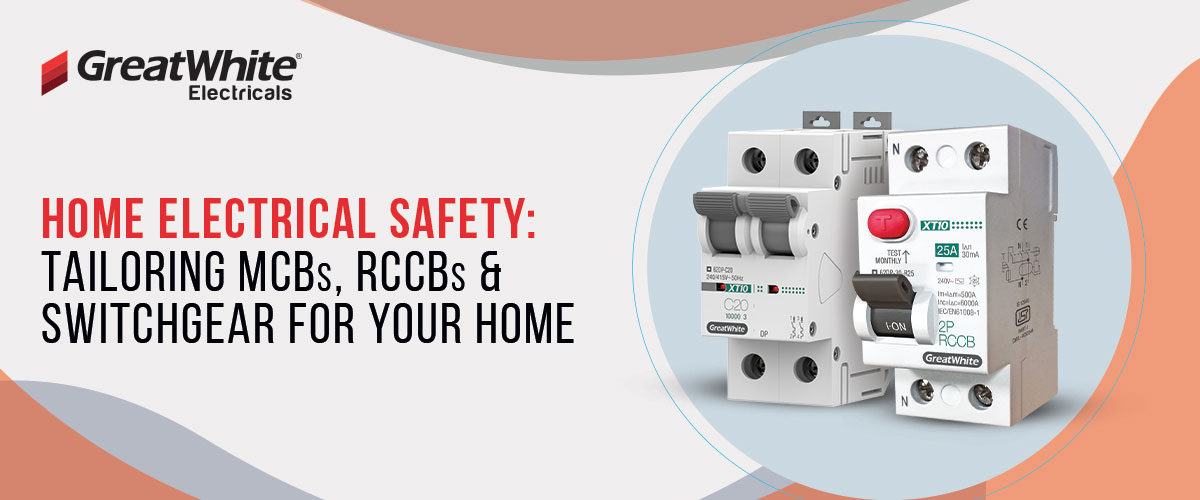
A circuit protection device is hardware that detects abnormal electrical conditions (overcurrent, short circuit, earth leakage, surges) and disconnects power to prevent damage or injury. Common devices include MCBs (Miniature Circuit Breakers) for overload/short‑circuit protection, RCCBs/RCDs for earth‑leakage protection, MCCBs for higher‑current incomers and modular switchgears for control and coordination. Choosing the right combination and ratings for your home is essential because every device has a unique load profile, wiring age and safety needs.
Why one-size-fits-all protection fails
- Every home has a unique load profile (ACs, geysers, kitchen appliances, EV chargers) and wiring age; a generic distribution board with mismatched breakers can allow nuisance trips or fail to isolate faults.
- MCBs (Miniature Circuit Breakers) protect branch circuits from overloads and short circuits; choosing the correct rating and curve (B, C, D) matters for motors and inductive loads.
- RCCBs / RCDs (Residual Current Devices) detect earth leakage and protect people from electrocution; they do not replace overcurrent protection and must be paired with MCBs.
- MCCBs and switchgears are used where higher fault currents or selective coordination is required; MCCBs provide robust short‑circuit interruption for main incomers. MCCBs are engineered to detect abnormal currents instantly and disconnect the faulty section before overheating or fire occurs.
Quick comparison (what to use where)
| Device |
Primary role |
Where to use |
| MCB |
Overload & short‑circuit protection |
Branch circuits (lights, sockets) |
| RCCB / RCD |
Earth‑leakage / human protection |
Bathrooms, kitchens, outdoor circuits |
| MCCB |
High current short‑circuit protection |
Main incomer, garage, EV charger feeds |
| Surge Protector |
Transient overvoltage protection |
Main DB, sensitive electronics |
Key steps to customize protection per home
- Perform a load audit and wiring inspection; list appliances, starting currents and cable sizes; this drives breaker sizing and curve selection.
- Select the right devices; MCB for branch circuits, RCCB/RCD for human safety, MCCB for main incomer or high‑current feeders and modular switchgears for control and monitoring. Distribution boards combining MCB + RCCB are standard for safe final distribution.
- Coordinate upstream and downstream protection so a fault trips the nearest breaker only (selectivity), avoiding whole‑house outages.
- Add surge protection and proper earthing to protect electronics from transient overvoltages and to ensure RCCBs operate reliably.
- Use branded, certified switchgear and follow local electrical codes; modular switchgear and distribution solutions simplify future upgrades.
How to customize circuit protection for your home
- Get a professional electrician to perform a load audit and earthing test.
- Specify MCB ratings and curves per circuit; install RCCBs for wet areas.
- Install surge protection at the main DB and consider modular switchgear for future expansion.
- Keep documentation (single‑line diagram, breaker ratings) for maintenance and insurance.
Risks, trade‑offs and practical tips
- Undersized breakers risk nuisance trips; oversized breakers risk cable overheating… both are dangerous. Correct cable‑breaker matching is critical.
- RCCBs alone don’t stop overloads; always pair with MCBs or MCCBs.
- Use selective coordination to avoid whole‑home outages; this may require MCCBs with adjustable trip settings.
Customizing circuit protection for each home is not an optional upgrade, it is a fundamental safety and reliability measure. In short, a one‑size‑fits‑all panel invites risk; a site‑specific protection scheme delivers safety, longevity and peace of mind. Arrange a professional electrician to assess your home, implement the recommended protections and keep the system documented and tested; that small investment today prevents large losses tomorrow!